
Ledger hardware wallet review: Ultimate guide 2026
Ledger hardware wallet review is a crucial step for cryptocurrency enthusiasts seeking secure storage solutions. In this ultimate guide, we delve into the features and performance of Ledger’s products to help you make an informed decision.
Ledger hardware wallet review: Company Background
Ledger hardware wallet review was founded in 2014 by Eric Larchevêque, Nicolas Bacca, and Joel Pons — a team with backgrounds in embedded security and smart card technology from companies like Oberthur Technologies and Gemalto. The company’s name reflects the immutable nature of blockchain. Ledger launched its first product, the Nano, shortly after its founding. By 2023, it had raised over $75 million in funding across multiple rounds.
Product Lineup
Ledger hardware wallet review currently offers several distinct hardware wallet models tailored to different user needs:
- Nano S Plus ($79): An entry-level device with a small OLED screen and two physical buttons, supporting up to 100 installed apps.
- Nano X (~$149): A Bluetooth-enabled version of the Nano S Plus for mobile users, featuring a larger OLED display and battery.
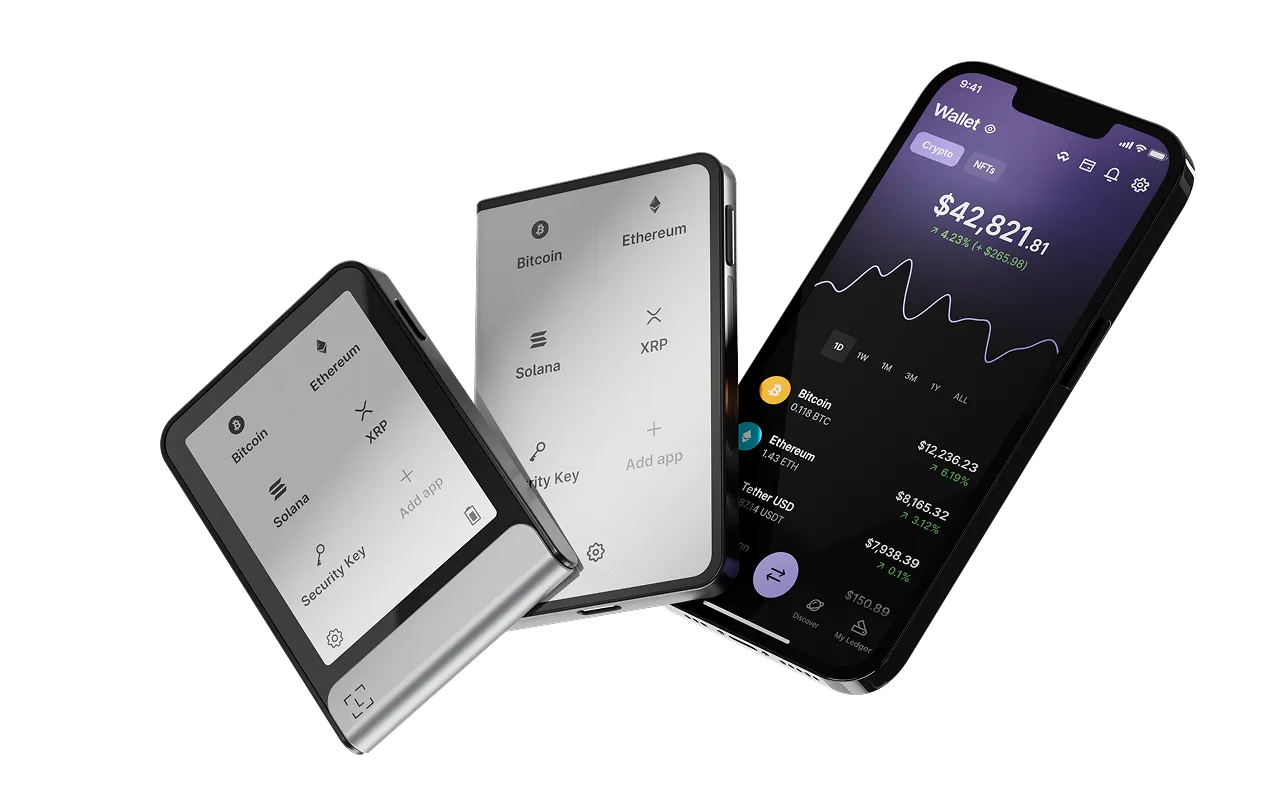
- Nano Gen5 (Affordable, launched late 2025): A touchscreen device with USB-C, Bluetooth, and NFC connectivity, supporting Ledger Recovery Key.
- Flex ($249): A mid-tier premium offering with a 2.84-inch E-Ink touchscreen, built-in magnets, and support for various connectivity options.
- Stax ($399): A luxury product featuring the world’s first curved E-Ink touchscreen, designed in collaboration with Tony Fadell.
Cryptocurrency Security
Ledger hardware wallet review hardware wallets are renowned for their strong security features. All devices store private keys on a Secure Element (SE) chip, certified under CC EAL6+ standards. The dual-chip architecture ensures that the standard microcontroller handles general functions while the SE manages private key operations.
Transaction Signing and Clear Signing
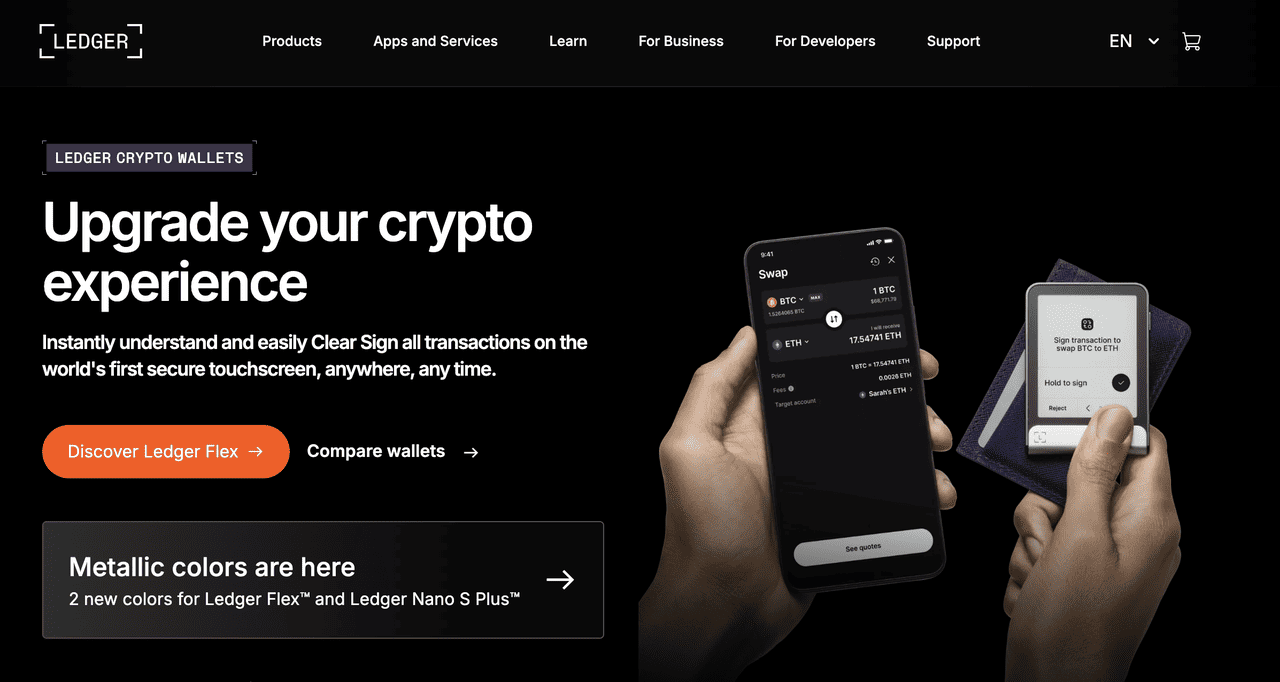
Transaction signing always requires physical confirmation on the device, ensuring that even a compromised connected computer cannot move funds without user approval. Ledger hardware wallet review’s Clear Signing feature displays full transaction details before confirming, adding an extra layer of security against blind signing attacks.
Cold Storage Devices
Ledger hardware wallet review wallets are specifically designed for cold storage, providing a secure environment to store cryptocurrency assets away from potential hacking risks. The dual-chip architecture and Secure Element ensure that private keys remain protected even if the device is compromised.
Secure Recovery Key
Newer Ledger hardware wallet review devices come with a 24-word Secret Recovery Phrase and a Ledger Recovery Key, which can be used as a hardware backup in case of loss or theft. No private keys are ever exposed during these processes.
Ledger Live – The Companion App
Every Ledger hardware wallet review device works in tandem with Ledger Live, the official companion application available on Windows, macOS, Linux, iOS, and Android. Ledger Live provides a unified dashboard for managing your entire crypto portfolio:
- Sending and receiving over 5,500 cryptocurrencies and tokens
- Buying crypto via third-party providers like PayPal, Ramp, and MoonPay
- Swapping assets across chains via integrated DEX and CEX aggregators
- Staking coins (including ETH, SOL, ATOM, and more) to earn yield
- Managing NFTs and interacting with dApps
The Controversies: Data Breaches & Ledger Recover
No honest review of Ledger would be complete without addressing the controversies that have tested its reputation. In 2020, Ledger suffered two significant data breaches when unauthorized access exposed customer personal information.
In late 2023, Ledger announced Ledger Recover — an optional paid service for backing up recovery phrases with trusted custodians. The community reaction was swift and hostile, feeling the feature contradicted Ledger’s core promise of keeping private keys fully offline and under user control.
Pros and Cons
Ledger does well:
- Industry-leading Secure Element hardware with an unblemished record on device-level hacking
- The widest cryptocurrency support in the market — 5,500+ assets
- Excellent companion software in Ledger Live, with staking, DeFi, NFT, and swap integrations
- A product for every budget, from the $79 Nano S Plus to the $399 Stax
- Strong third-party wallet compatibility (MetaMask, Phantom, etc.)
- CSPN certification from France’s ANSSI cybersecurity agency on select models
- Clear Signing for transparent transaction verification
Ledger falls short:
- Firmware and companion app are not fully open source, limiting independent auditability
- The 2020 data breaches damaged trust and exposed the vulnerability of its customer data infrastructure
- Ledger Recover remains controversial and has fueled ongoing skepticism about key sovereignty
- Flex model’s limited storage can require frequent app juggling for diverse portfolios
- The Bluetooth connection can be unreliable on mobile
- Premium models (Flex, Stax) are significantly more expensive than competing options from Trezor
Who Is Ledger For?
Beginners: Should start with the Nano S Plus — it offers the same core security as premium models at a fraction of the cost.
Mobile users: Who want Bluetooth connectivity and on-the-go management should consider the Nano X.


