
Lucid Trading review: An In-Depth Look at the Proprietary Trading Firm
This Lucid Trading review explores a prominent proprietary trading firm that has gained significant attention in 2024-2025. In the dynamic world of proprietary trading, firms focused on futures are becoming increasingly popular due to their organized exchange model and clear regulatory framework. Lucid Trading positions itself as a “trader-first” platform, and this Lucid Trading review will delve into its technical infrastructure, payout reliability, risk management protocols, and overall value proposition for both aspiring and seasoned retail traders.
The Core Philosophy: Transparency in the Futures Market
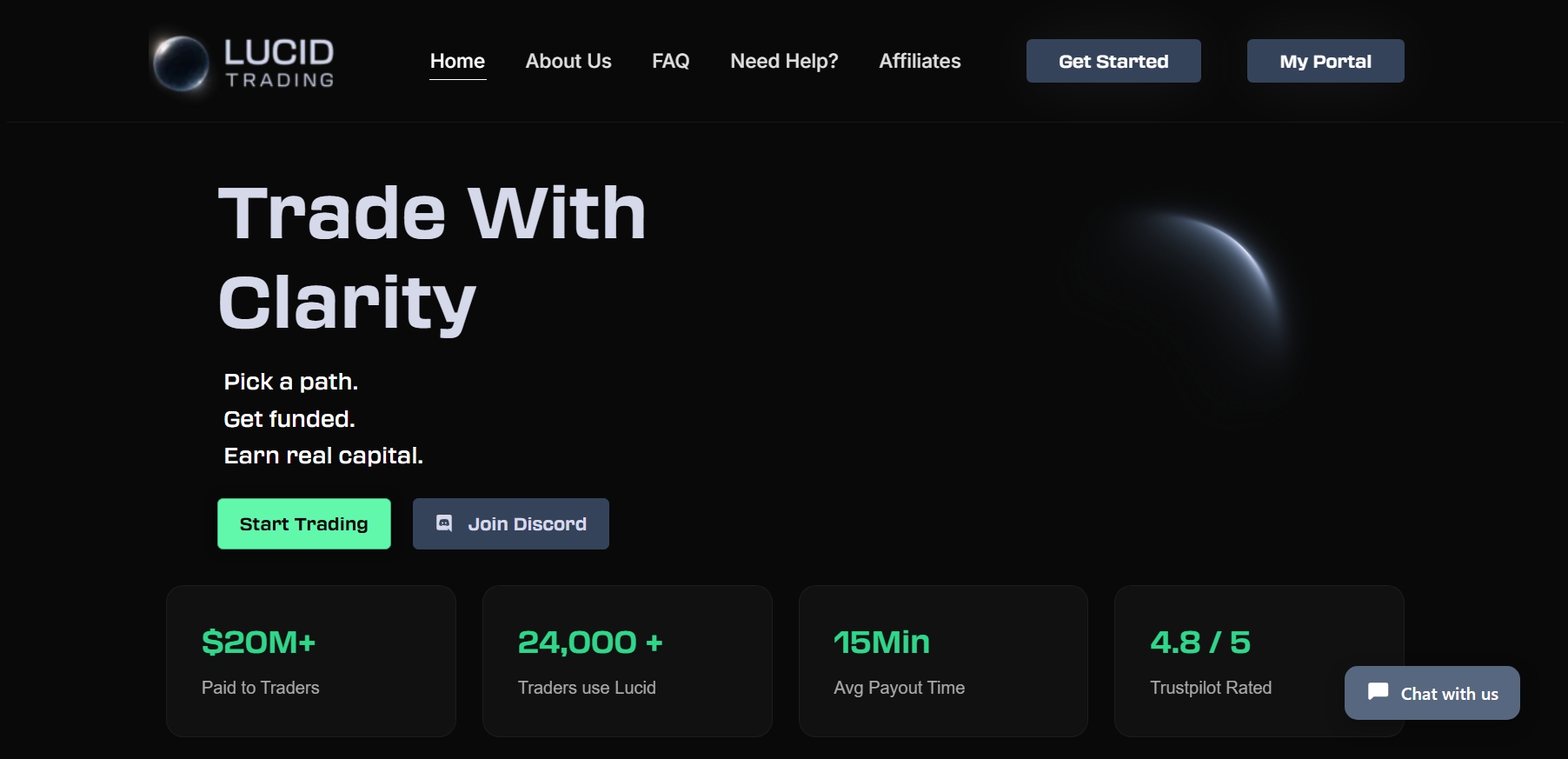
Unlike many firms that utilize CFDs (Contracts for Difference) through unregulated brokers, Lucid Trading operates exclusively within the Futures market, specifically CME futures trading (CME, CBOT, NYMEX, COMEX). This distinction is crucial for traders.
Every price movement observed by traders is derived from a centralized exchange. This ensures that “price manipulation” or “broker hunting” is practically non-existent, offering a fair trading environment.
The firm’s philosophy appears to be built on lowering the barrier to entry while upholding stringent discipline. By removing common industry hurdles like activation fees and extended waiting periods, Lucid Trading attracts traders who prioritize liquidity and operational efficiency.
Account Types and Funding Path

Lucid Trading offers a range of account sizes, typically spanning from $25,000 to $250,000 in simulated capital. The funding path is structured through two primary models, forming part of their trader evaluation programs.
Trader Evaluation Programs: Traditional Evaluation
- Traders must achieve a specific profit target.
- They must also adhere to a maximum loss limit (drawdown).
- This phase is designed to assess a trader’s edge and emotional resilience.
Trader Evaluation Programs: Accelerated Path (LucidLive/LucidFlex)
- These accounts are for those who prefer to bypass lengthy evaluation phases.
- They come with stricter risk parameters.
- They offer a faster route to earning real profit splits.
Lucid Trading utilizes Rithmic and Tradovate/NinjaTrader data feeds. These are industry-standard tools known for their low-latency execution, which is vital for scalpers who depend on millisecond precision within this futures trading platform.
Prop Firm Payouts: Dynamics and Liquidity
A common pain point in the proprietary trading firm industry is the payout process. Historically, traders often had to wait 30 days for their initial withdrawal. Lucid Trading has revolutionized this by introducing Daily Payouts, a key aspect of this Lucid Trading review.
Once a trader reaches the “Funded” stage and surpasses the “buffer zone” (a minimum profit threshold required to cover potential losses), they can request withdrawals on a daily basis. This is a significant advantage for traders.
The profit split typically aligns with industry standards, such as 80/20 or 90/10, where the trader retains the majority of their gains. Frequent, smaller payouts are often indicative of a healthier firm than those that permit only large, infrequent withdrawals. This demonstrates consistent cash flow and robust risk management for the proprietary trading firm.
Risk Management: The End-of-Day (EOD) Drawdown
Effective risk management is where many traders falter. Lucid Trading employs an End-of-Day (EOD) Drawdown model for many of its accounts, which is a significant advantage over “Intraday Trailing Drawdown” within this futures trading platform.
EOD Drawdown Explained
- The drawdown only updates at the close of the trading day.
- It is based on your account balance at that time.
- If you are up $2,000 during the day but close a trade with a $500 profit, your drawdown does not “trap” you at the $2,000 peak.
This model reduces the “choking” effect on trades, allowing for more natural market fluctuations without the fear of an accidental account breach during a temporary retracement. This is a crucial element of the Lucid Trading review, highlighting their trader-friendly approach.
The Consistency Rule: Promoting Long-term Success
To ensure traders are not simply gambling on high-impact news events, Lucid Trading enforces a Consistency Rule, typically known as the 35% rule. This rule is designed to foster a professional mindset among traders and is a key component of their trader evaluation programs.
The Logic of the Consistency Rule
- No single trading day should account for more than 35% of the total profit at the time of a payout request.
- This encourages traders to maintain a steady performance rather than relying on sporadic large gains.
This rule promotes a more professional approach to trading, encouraging consistent performance over time. This Lucid Trading review emphasizes that this is beneficial for long-term trading success within the proprietary trading firm.
Verdict
In conclusion, this Lucid Trading review finds the firm to be a compelling option for futures traders. Its commitment to transparency, flexible account options, innovative daily prop firm payouts, and trader-friendly risk management protocols set it apart. For those seeking a reliable proprietary trading firm with a strong focus on CME futures trading and comprehensive trader evaluation programs, Lucid Trading presents a robust platform.


