
Funded Trader Program Review: Unveiling the Truth for Aspiring Traders
This comprehensive Funded Trader Program review aims to provide an impartial assessment for aspiring traders. We’ll delve into its features, benefits, drawbacks, and compare it against other proprietary trading firms to help you determine if it aligns with your trading goals.
What is the Funded Trader Program?

The Funded Trader Program is a popular option for individuals looking to enter the trading industry. Similar to other programs, it allows traders to operate with a funded account, significantly reducing personal financial risk.
What sets it apart are its distinctive elements, including a specific trading platform and unique risk management protocols. Qualification also differs, as traders must typically pass an evaluation before gaining access to a funded account.
While some traders seek maximum flexibility, the program’s emphasis on risk management can be particularly appealing to those new to trading or looking to mitigate their exposure. It’s crucial for traders to carefully analyze the features and requirements of various trading systems to find the best fit for their needs and ambitions.
Pros of the Funded Trader Program
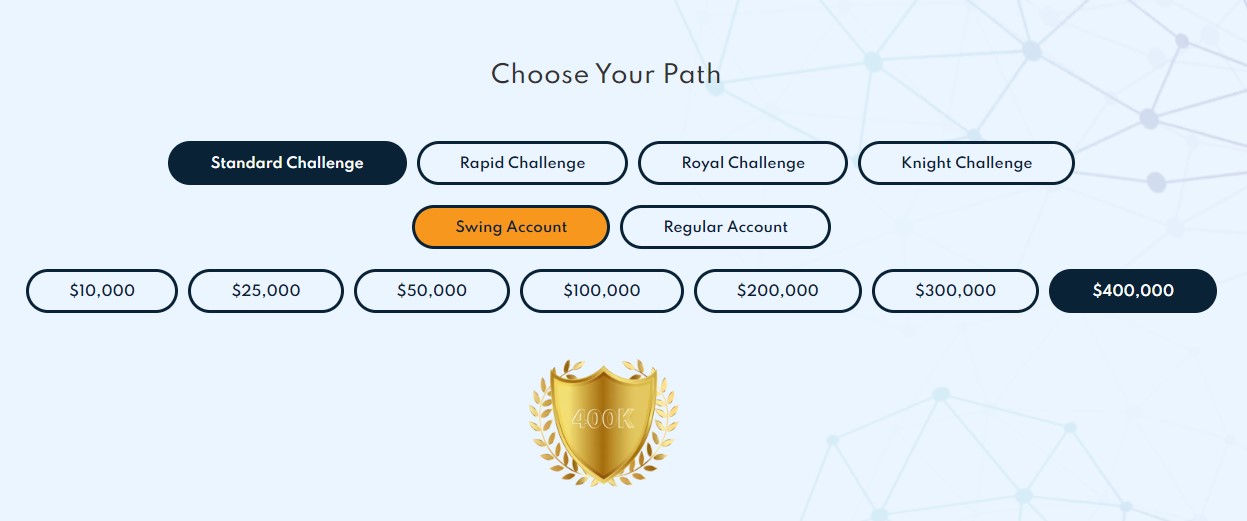
A Funded Trader Program review often highlights several key advantages that differentiate it from other offerings. These benefits make it an attractive choice for many aspiring traders.
- High-Profit Potential: Traders can access substantial capital, leading to significantly higher earning opportunities compared to trading with personal funds. You keep a percentage of your profits, which can be considerably larger than what other programs might offer.
- Low Risk: The program provides a low-risk trading method with minimal personal financial investment. This allows traders to hone their skills and knowledge without jeopardizing significant personal capital.
- Access to Funding: The immediate access to substantial capital is a major benefit. This enables traders to operate in larger markets and potentially achieve greater returns.
- Professional Development Opportunities: The program often includes access to training materials, trading mentors, and other resources designed to help traders develop their skills and succeed in the long term. This focus on growth is a significant plus in any proprietary trading firms comparison.
Cons of the Funded Trader Program

Despite its advantages, a thorough Funded Trader Program review must also address its potential drawbacks. These are important considerations when evaluating funded trading accounts explained.
One significant downside, especially when comparing the Funded Trader Program vs others, is the high expectations placed on traders to maintain their funded accounts. The program typically mandates achieving a specific profit target within a defined timeframe.
Failure to meet these stringent criteria can result in the loss of the funded account. Additionally, the program might offer less flexibility regarding trading strategies, which can be a disadvantage for experienced traders who prefer more autonomy over their methodologies.
Funded Trader Program vs Others: Proprietary Trading Firms Comparison
When conducting a proprietary trading firms comparison, understanding the nuances of each program is essential. The Funded Trader Program stands out with its direct access to capital and structured risk management.
Other firms might offer different evaluation processes, profit splits, or available asset classes. Some may focus more on educational resources, while others prioritize immediate funding. It’s crucial to research the best funded trader programs that align with your trading style and risk tolerance.
Consider the evaluation fees, the difficulty of the challenge, and the ongoing rules once funded. Each firm has its own unique ecosystem, and what works for one trader might not work for another.
Funded Trading Accounts Explained
Funded trading accounts are essentially capital provided by a proprietary trading firm to a trader who has successfully passed a rigorous evaluation. The firm bears the capital risk, while the trader executes trades and earns a percentage of the profits.
These accounts allow traders to scale their operations significantly without using their personal savings. The firm benefits from the trader’s successful strategies, sharing in the profits generated.
Understanding the terms and conditions of these accounts, including profit splits, drawdown limits, and scaling plans, is vital before committing to any program, including the Funded Trader Program.
Best Funded Trader Programs: What to Look For
Identifying the best funded trader programs involves evaluating several key factors. Beyond a positive Funded Trader Program review, consider the following:
- Reputation and Track Record: Look for firms with a solid reputation and positive trader testimonials.
- Evaluation Process: Is the challenge fair and realistic? What are the specific rules and objectives?
- Profit Split: What percentage of the profits do traders keep? A higher split is generally more attractive.
- Scaling Opportunities: Does the firm offer a clear path to increase your funded capital as you prove profitability?
- Customer Support: Responsive and helpful support can make a significant difference, especially for new traders.
Conclusion
This Funded Trader Program review indicates that it offers a compelling opportunity for aspiring traders seeking to leverage significant capital without personal financial risk. Its high-profit potential and professional development resources are clear advantages.
However, the stringent performance expectations and potential lack of strategic flexibility are important considerations. By carefully weighing these pros and cons, and comparing it with other proprietary trading firms, traders can make an informed decision about whether the Funded Trader Program is the right path to achieve their trading ambitions.


